
Slip ratings
Slip ratings measure how much grip a floor gives underfoot. Tile carries up to three separate ratings from three different tests: an R value for shoes, a class from A to C for bare feet, and a DCOF number for wet floors. This guide explains all three and shows which grip each room needs.
Download as PDFThe three tests
The ramp test for shoes.
A person in work boots walks an oiled ramp. The ramp tilts steeper until they slip. The steeper the angle the tile survives, the higher the R value.
The ramp test for bare feet.
The same idea with bare feet and soapy water. It reports Class A, B or C. Class C grips the most.
The friction test.
A machine drags a rubber sole across the wet tile and measures the drag. In the United States a wet walking surface needs a DCOF of 0.42 or higher.
The R scale
Barefoot classes
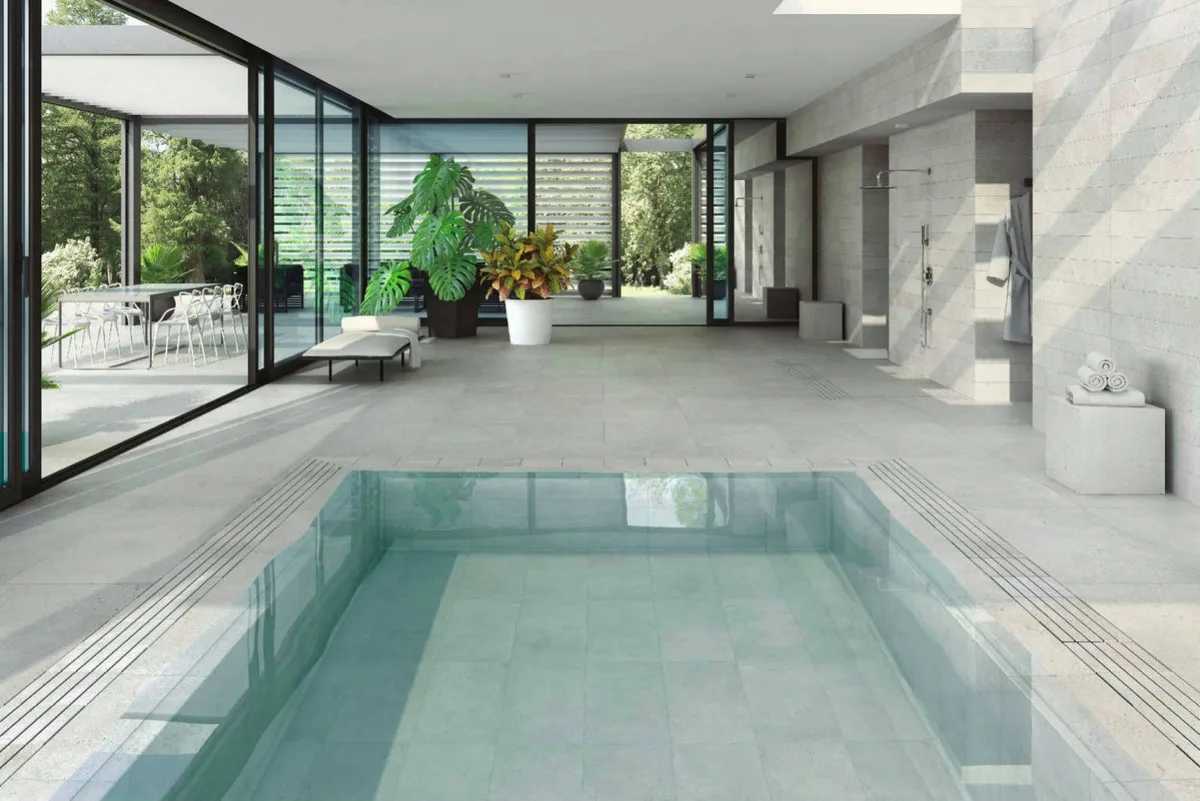
Pool areas are rated for bare feet, not shoes. At the water's edge this is the scale that matters.
Which grip each room needs
| Room | Rating |
|---|---|
| Bedrooms, living rooms, hallways | R9 |
| Kitchens | R9 or R10 |
| Bathrooms and laundry | R10 |
| Showers and wet rooms | R11 or Class B |
| Patios and outdoor paths | R11 |
| Pool decks | Class B or C |
| Pool steps and ramps into water | Class C |
| Commercial kitchens and workshops | R12 or R13 |
A higher grip is not automatically better indoors. Rough surfaces hold on to dirt and take more scrubbing. Match the rating to the room and stop there.
Reading a technical sheet
Slip ratings sit in the performance section of a tile's technical sheet. The shoe rating appears next to DIN 51130, the barefoot class next to DIN 51097, and the friction number next to DCOF or ANSI A326.3. A tile does not need all three. Many indoor floors list only the R value, and pool lines list the barefoot class. Every PORCEMALL product page prints the ratings its factory reports and leaves out the ones it does not.
Common questions
What slip rating do I need for a bathroom floor?
R10 covers a home bathroom. If the floor takes standing water every day, as in an open shower, look for R11 or barefoot Class B.
What does the R in R11 stand for?
It marks a result of the DIN 51130 ramp test. The scale runs from R9 to R13. There is no R1 to R8.
Is a higher slip rating always safer?
It grips more, and it also holds more dirt and takes more effort to clean. Indoors, match the room. R12 and R13 belong in work areas.
What is DCOF?
Dynamic coefficient of friction. A machine measures the drag of a rubber sole moving over wet tile. United States specifications use it, and 0.42 is the accepted minimum for a wet walking surface.
Which rating matters for a pool deck?
The barefoot class from DIN 51097. Class B covers the deck. Class C is the class for steps and ramps that lead into the water.
Do slip ratings change when the floor is wet?
The tests already run wet. The rating describes the floor at its most slippery, with oil in the shoe test and soapy water in the barefoot test.
Check any floor against this guide
Every PORCEMALL product page lists its ratings in the quick facts and in the technical data table. Open a product page and check it against this guide.