

Care & maintenance
How to clean and protect porcelain tile, SPC vinyl and laminate.
All floors
Routine
Sweep or vacuum before you mop. Grit scratches the surface when it is walked on or mopped.
Cleaner
Use a pH-neutral floor cleaner, diluted as the label says. Plain warm water is enough for most routine mopping.
Spills
Wipe them up as soon as you see them. Liquid left standing soaks into grout and into laminate joints.
Spares
Keep at least one spare box for repairs. A later production run can differ in shade.
Do and don't
Put mats at outside doors to catch sand and grit.
Use wax or oil soap on any of these floors. Both leave a film that holds dirt.
Put felt pads under furniture legs, and replace them when they wear.
Drag or roll heavy furniture or appliances. Lift them, or move them on a board.
Put a protective mat under wheeled office chairs.
Use steel wool, scouring pads or abrasive powder.
Test a new cleaner on a spare piece or a hidden spot first.
Use a steam mop on SPC vinyl or laminate.
By floor type
| Porcelain tile | Includes pool tile, mosaics and decor pieces. After mopping with a cleaner, rinse with clean water. Change the rinse water often so no residue is left. |
|---|---|
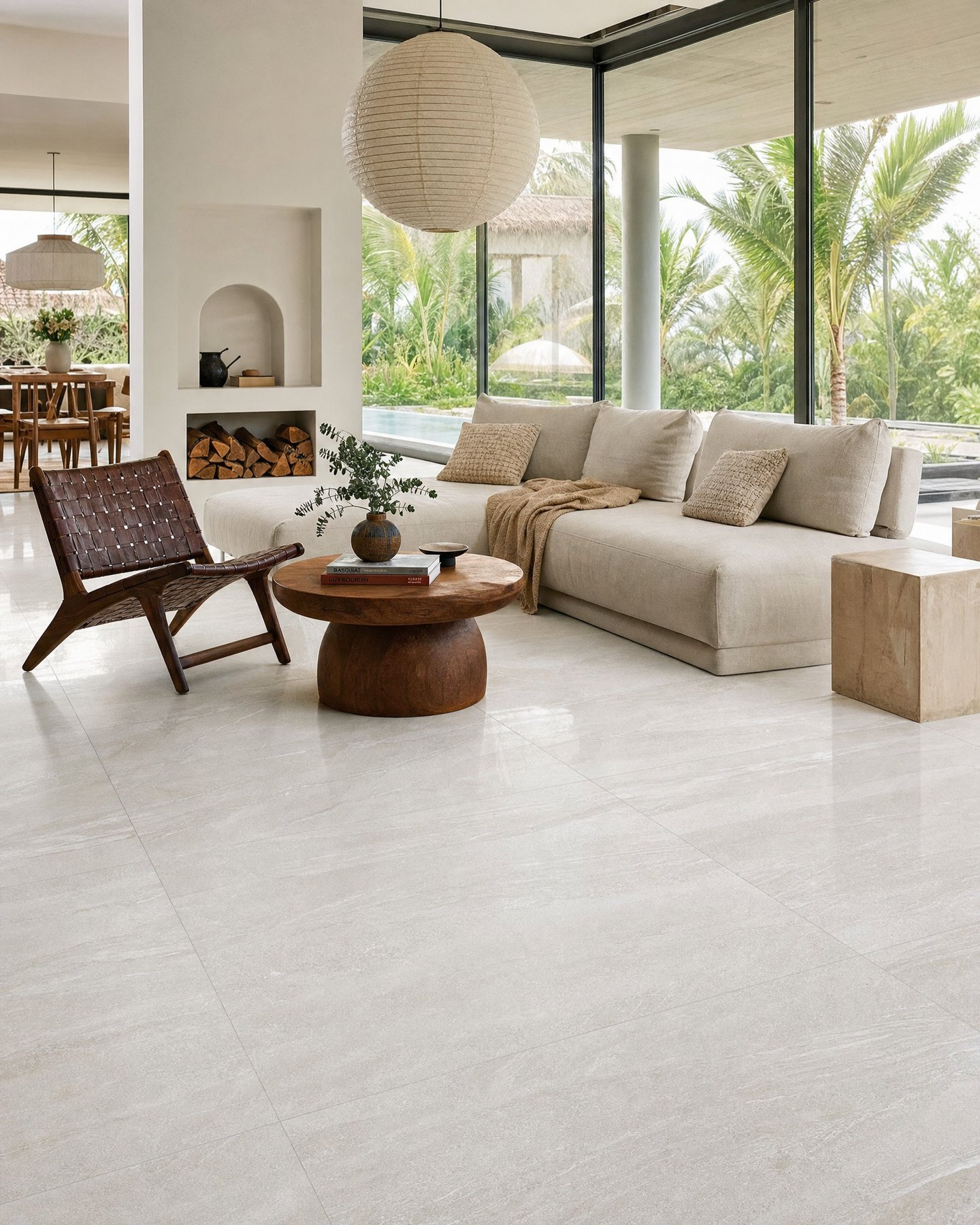
| Polished porcelain | Use as little cleaner as possible, and dry with a microfiber cloth to avoid streaks. |
| 3D matte porcelain | Clean the relief with a soft or nylon brush. |
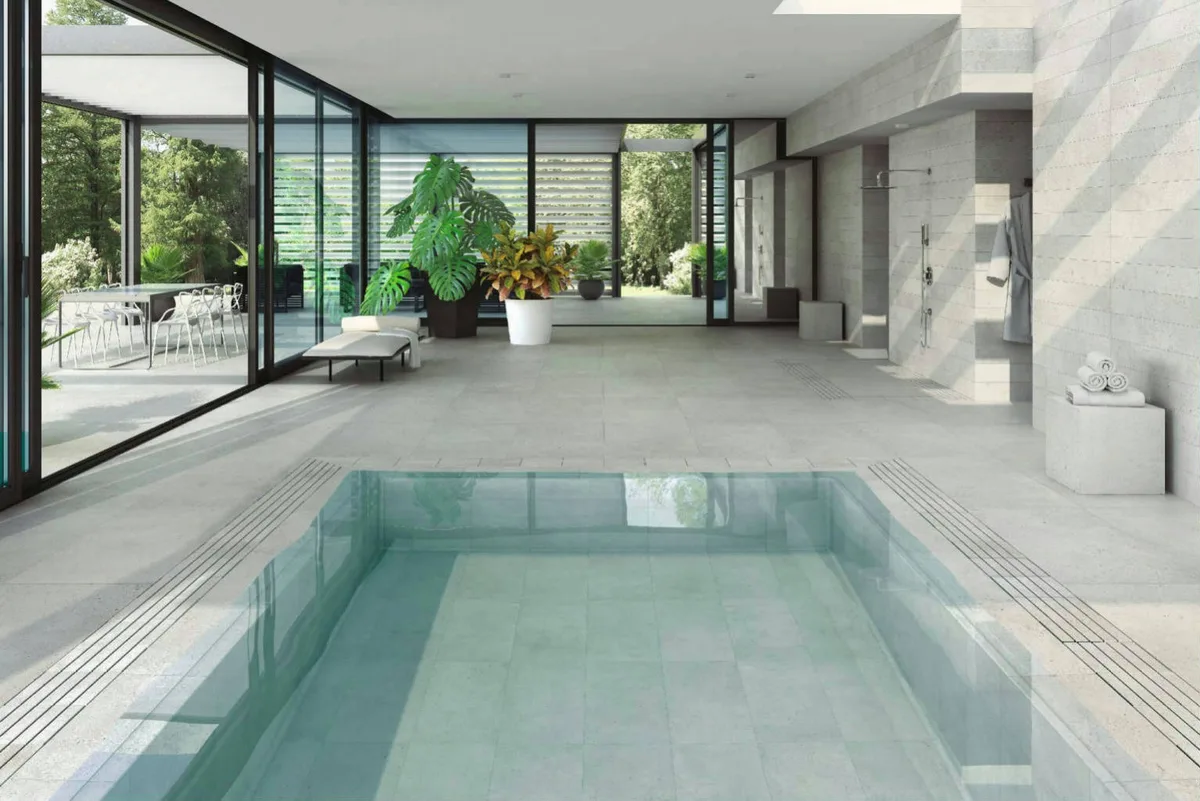
| Outdoor and pool deck | Sweep, scrub with a nylon brush and a neutral cleaner, then rinse with a hose. Cleaning machines and surface treatments can change the slip resistance of an anti-slip tile. |
| Pool waterline | Brush it regularly so mineral scale does not build up. Use a pool tile cleaner. |
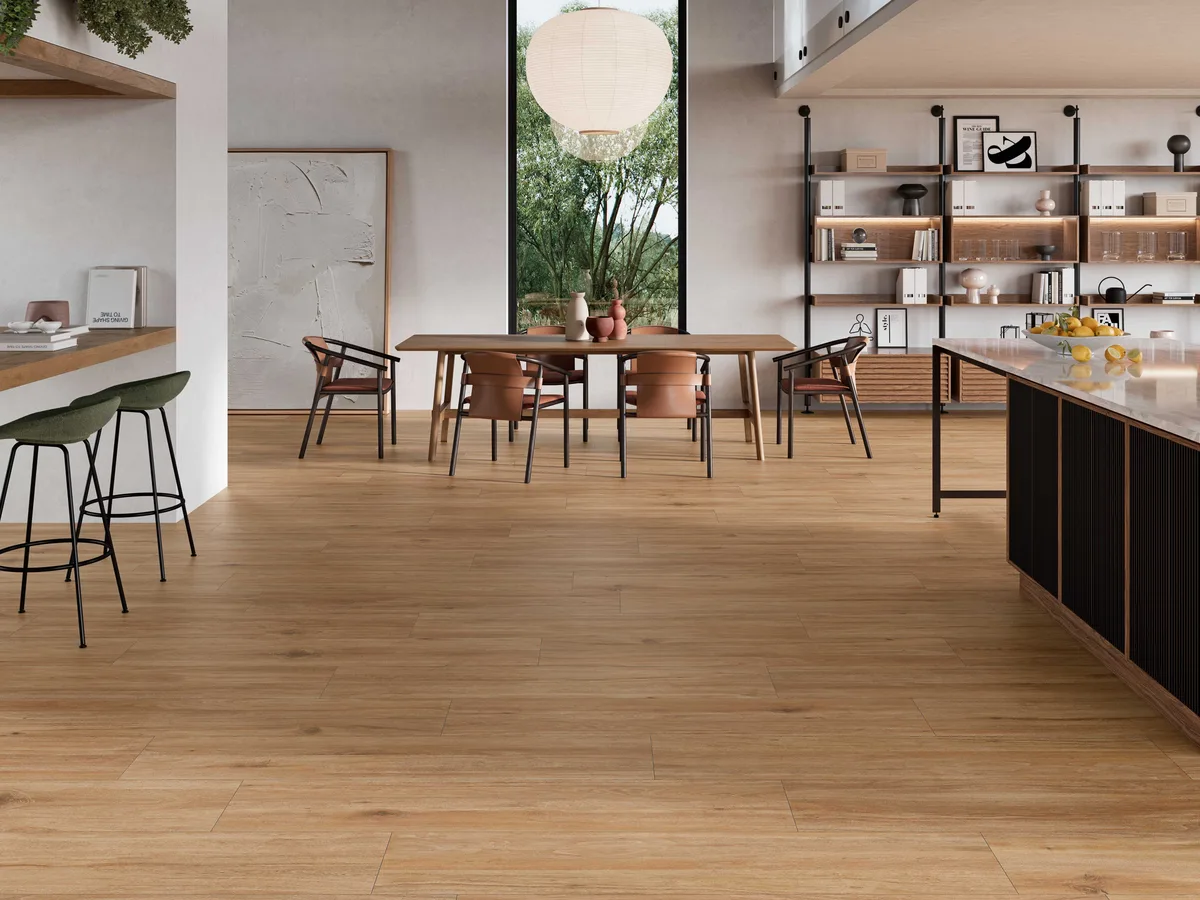
| SPC vinyl | Sweep with a soft brush, and use a damp mop, never a wet one. Keep the floor between 32°F and 140°F (0°C and 60°C), and limit direct sun with blinds or curtains. Use door mats without a rubber backing. |
| Laminate | Use a mop wrung almost dry. Never leave water standing on it: the core is wood fiber and swells. |
Each product page lists its material and finish under Specifications. Porcelain stoneware is porcelain tile, and stone plastic composite is SPC vinyl. Where a product's technical sheet gives different care instructions, follow the sheet.
Grout
Cement grout
It is porous and absorbs spills that the tile does not. Seal it once it has cured, as the grout maker directs. Seal it again when a drop of water soaks in instead of beading.
Epoxy grout
It resists stains without a sealer.
Cleaning
Scrub the joints with a nylon brush and an alkaline tile and grout cleaner.
Avoid
Acid cleaners attack cement grout, and bleach can fade colored grout. Never use an acid cleaner on a newly installed floor.
Grout & trim covers grout types and joint width.
Stains
Hard water
Hard water leaves a white mineral film. Remove it with a mild acid cleaner made for tile, tested first on a small area. Rinse well and keep the cleaner off cement grout.
Other stains
See Stain classes for how to remove specific stains from tile.
Common questions
Can I use a steam mop?
Not on SPC vinyl or laminate. Steam does not harm porcelain tile, but check the grout sealer's instructions before using it on sealed grout.
Does porcelain tile need sealing?
Cement grout does. Most porcelain tile does not. Some polished porcelain calls for a sealer, so check the product's technical sheet or ask us before sealing it.
Why does my floor look streaky?
Streaks usually come from cleaner residue or hard water. Use less cleaner, go over the floor again with clean water, and dry polished tile with a microfiber cloth.
Ask for a technical sheet
Care can vary by product. For a product's technical sheet, call or email with its name or order code (SKU).