

Square feet into boxes, with the overage that keeps your spares on one run.
Shade variation
Shade variation is how far the pieces of one product differ from each other in color and tone. It is rated V1 to V4, and a high number is a design intention, not a defect. This guide covers the four steps, and then the thing that decides how your floor really looks: the production run every box came off.
Download as PDFThe V1 to V4 scale
Tile is rated for appearance on a four step scale. It describes how far one piece should differ from the next inside a single production run. It is not a quality grade, and a V4 is not made to a lower standard than a V1. The scale is published in ANSI A137.1, the American standard for ceramic tile, and the factory prints the rating on the technical sheet.
| Rating | What to expect |
|---|---|
| V1 · Uniform | Pieces look nearly the same. The differences are there, but you have to look for them. |
| V2 · Slight variation | One design and one color, with small differences in grain and tone from piece to piece. |
| V3 · Moderate variation | Every piece carries the same colors in different amounts. The floor reads as a mix. |
| V4 · Substantial or random | Color and pattern move so far that one piece tells you little about the next. Common on stone looks. |
Read it next to the face count. Faces is how many printed designs a run carries. The V number is how far apart they sit in color. A product can have forty faces and still be a calm V2 floor.
A high V is a choice
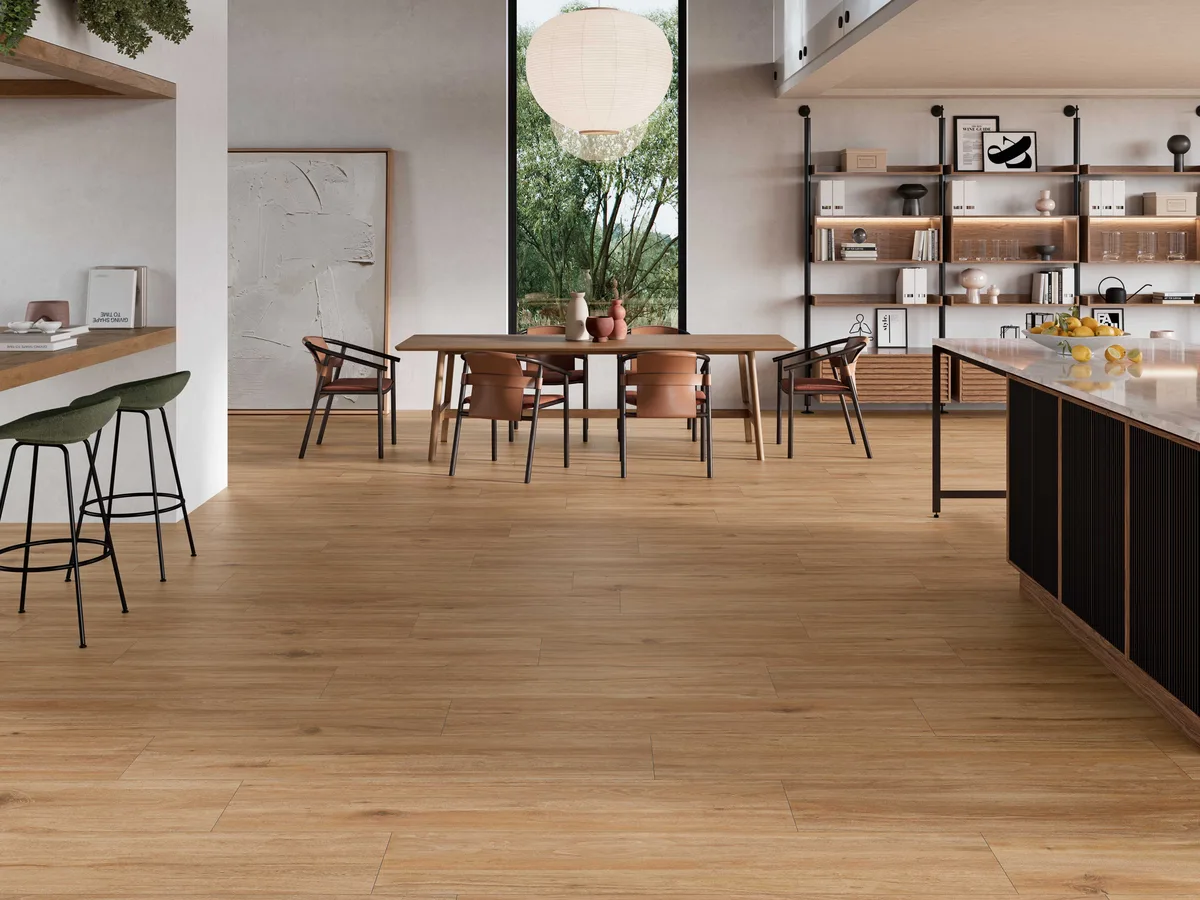
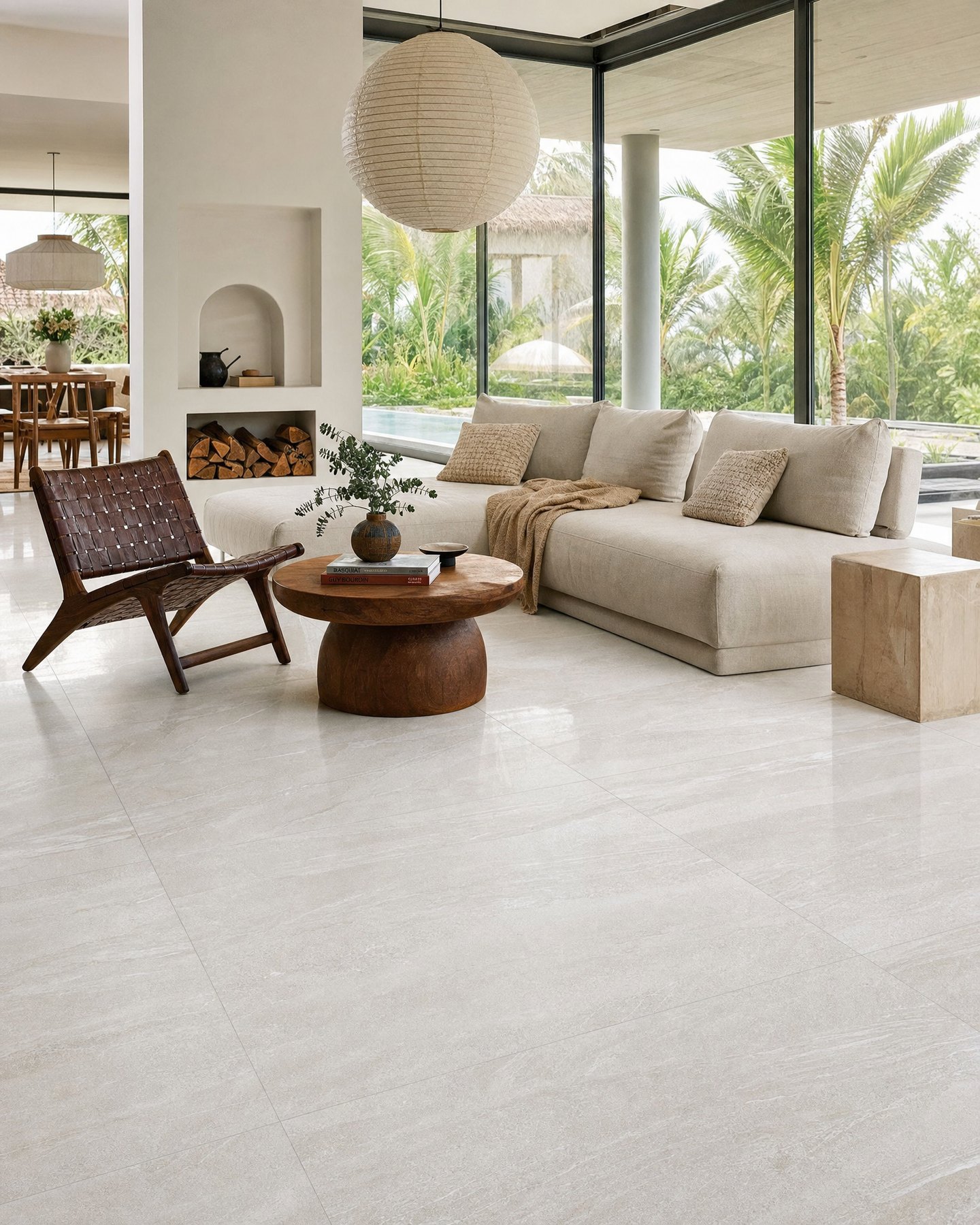
Marble came out of blocks that never matched. A weathered oak floor has boards off different trees. Anything imitating a natural material has to carry that spread or it looks printed. A V3 or a V4 is the factory copying what the material does.
ONE PIECE IS NOT THE FLOOR
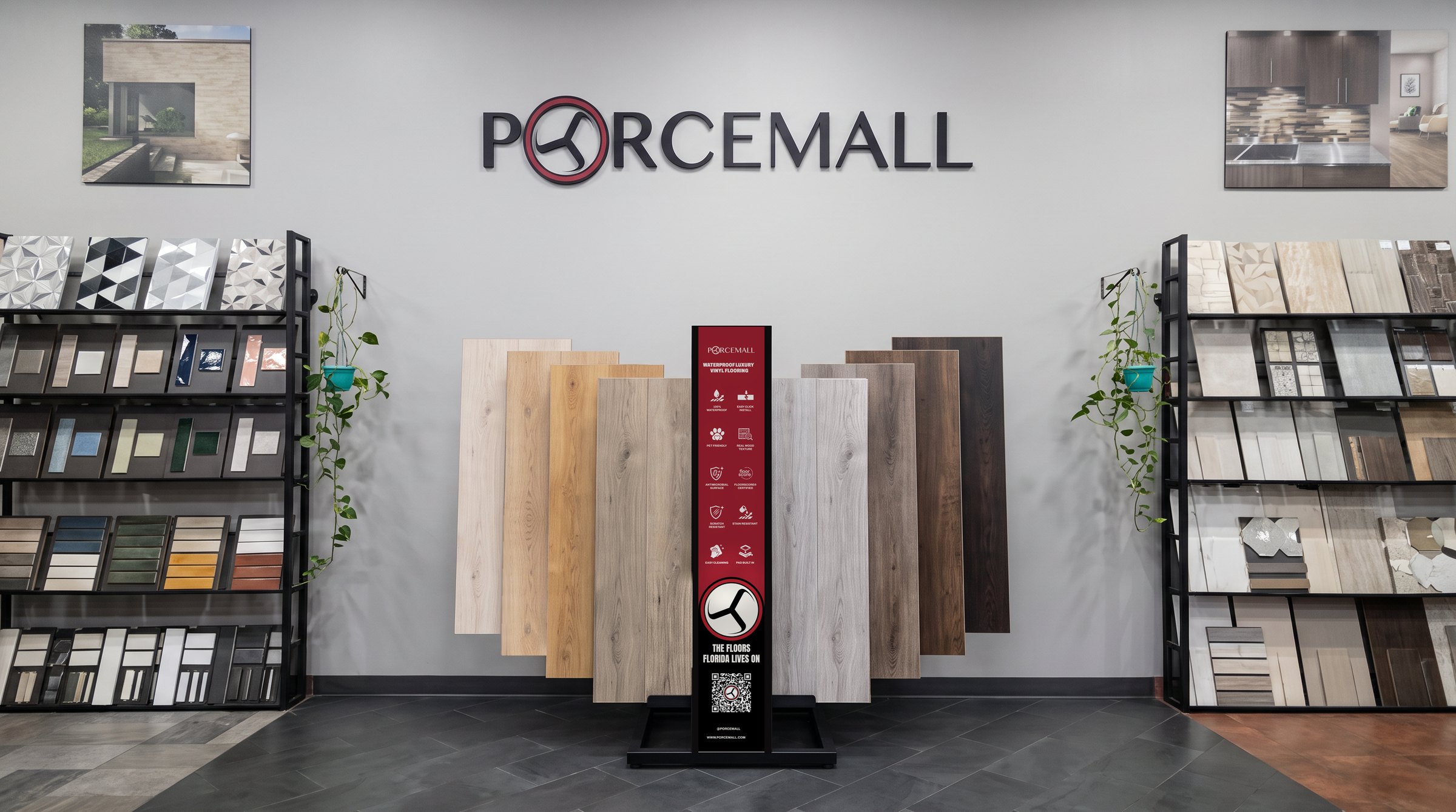
On a V4, a single sample tells you very little. Ask to see several pieces together, or the display panel in the showroom.
CALM OR BUSY IS YOURS
A V1 or V2 gives an even floor. A V3 or V4 gives movement. Neither is the safe answer, so say which one you want before the order goes in.
IT IS NOT A FAULT
Pieces that differ inside the range the product declares are the product working as designed. Pieces that differ from the run you were shown are the next section.
Why two boxes can differ
Tile is made in runs. A run is one batch of body, one batch of glaze and ink, and a stretch of hours at temperature. Change any of the three and the color moves. Inside a run it moves so little that the pieces belong on the same floor. Between runs it can move enough to read as a line across the room.
The kiln moves the size too. A pressed tile shrinks as it fires, never by exactly the same amount, so the factory sorts what comes out into calibers. Two boxes in two calibers sit a fraction of an inch apart, which is enough to spoil a tight joint.
Every box label carries the three things that identify it.
SHADE
The tone that run came out at. Sometimes a letter, sometimes a number.
CALIBER
The worked size the pieces measured after firing.
LOT
The run itself. This is the one to keep.
Photograph a label before the boxes are opened. Once the packaging is gone, it is the only record left.
Order the floor once
The whole point of a lot number is that you want one of them. Measure the job, add the overage the pattern needs, and buy it all at the same time. How much to order has the arithmetic.
Porcemall holds production batches for projects, so every box on a job comes off one run and the spares come off it too. Ask your retailer to have the batch held when the job is measured, not when the tile is nearly gone.
And never top up a finished floor from a new run sight unseen. Ask to see pieces of the new one against a tile off the floor, in daylight. Sometimes the shift is invisible. Sometimes it is a patch you cannot stop seeing, and the honest answer is to give the new run a room of its own.
Mix the boxes before you set them
Variation is only a problem when it pools. Ten darker pieces spread across a room read as movement. Ten darker pieces in one corner read as a stain.
So work from several boxes at once. Open four or five and pull pieces in turn from all of them, all the way across the floor. Dry lay a stretch first, with no mortar under it, and look at it from the doorway rather than from your knees. Turn a piece that lands badly instead of setting it and hoping. Installation basics shows where this sits in the sequence.
Look under the light the room will really have. A floor judged under a warehouse fixture and lived with beside a window is two different floors.
Keep reading
Common questions
Is a V4 lower quality than a V1?
No. The V rating describes appearance and nothing else. A V1 and a V4 from one factory are pressed, fired and tested the same way, and both carry the same performance table.
The new box does not match the floor I laid last year. Why?
Almost always a different production run. Tone and caliber both drift between runs, and no factory promises a match across them. Check the lot number on the new box against the label you kept.
Can I order a few more boxes later?
You can, and it may match, but nobody can promise it will. That is what the overage on the first order is for. Order the spares with the floor and keep them flat, dry and labelled.
Where do I find the V rating?
On the manufacturer's technical sheet and on the box label. If it is not in front of you, your retailer can ask us before the order goes in.
Does grout change how much variation I see?
Yes. A grout near the middle tone of the tile calms a busy floor, because the joints stop drawing a grid over it. A contrasting grout does the opposite. See grout and trim.
See the run before you set it
Ask your retailer for several pieces of the run you are buying, not one, and look at them in the light of the room they are going into. We hold production batches for projects, so every box on a job comes off one run.