
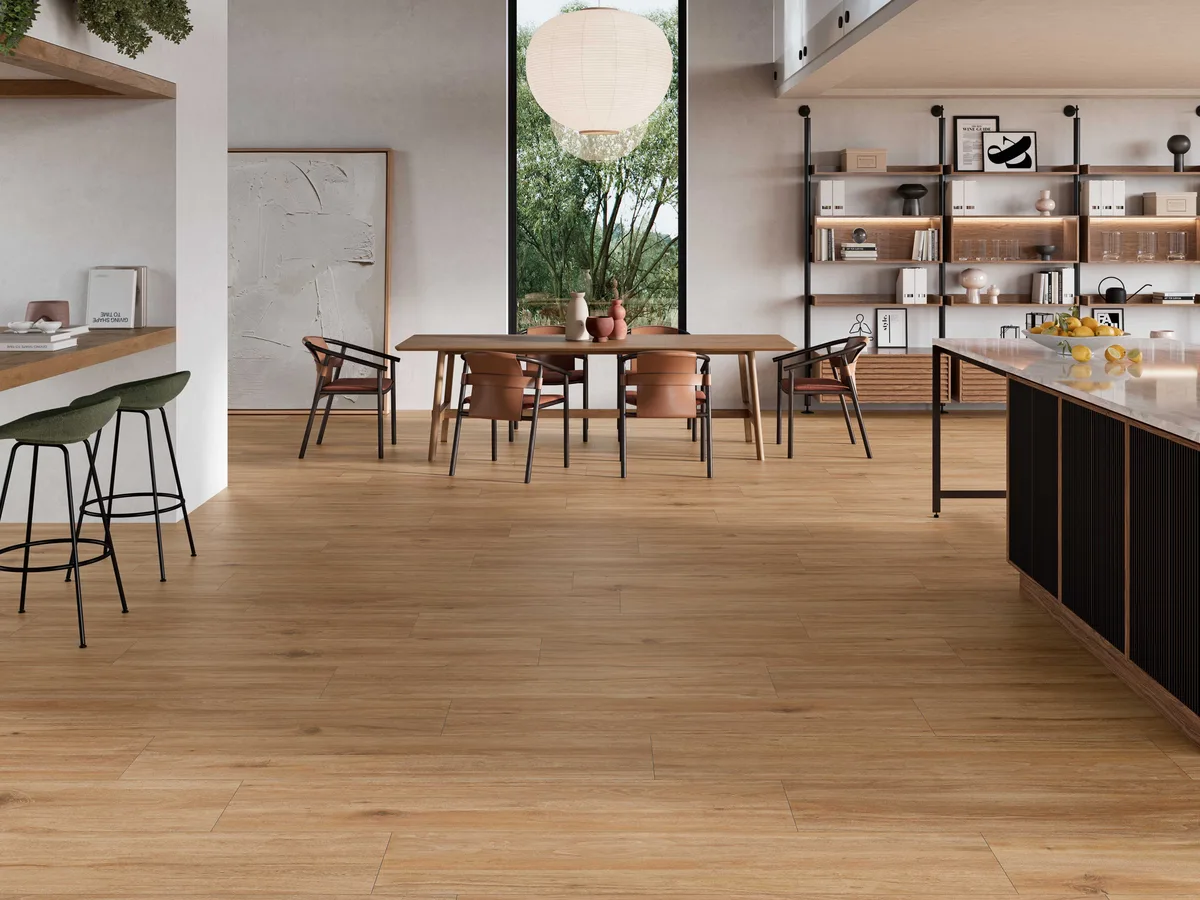
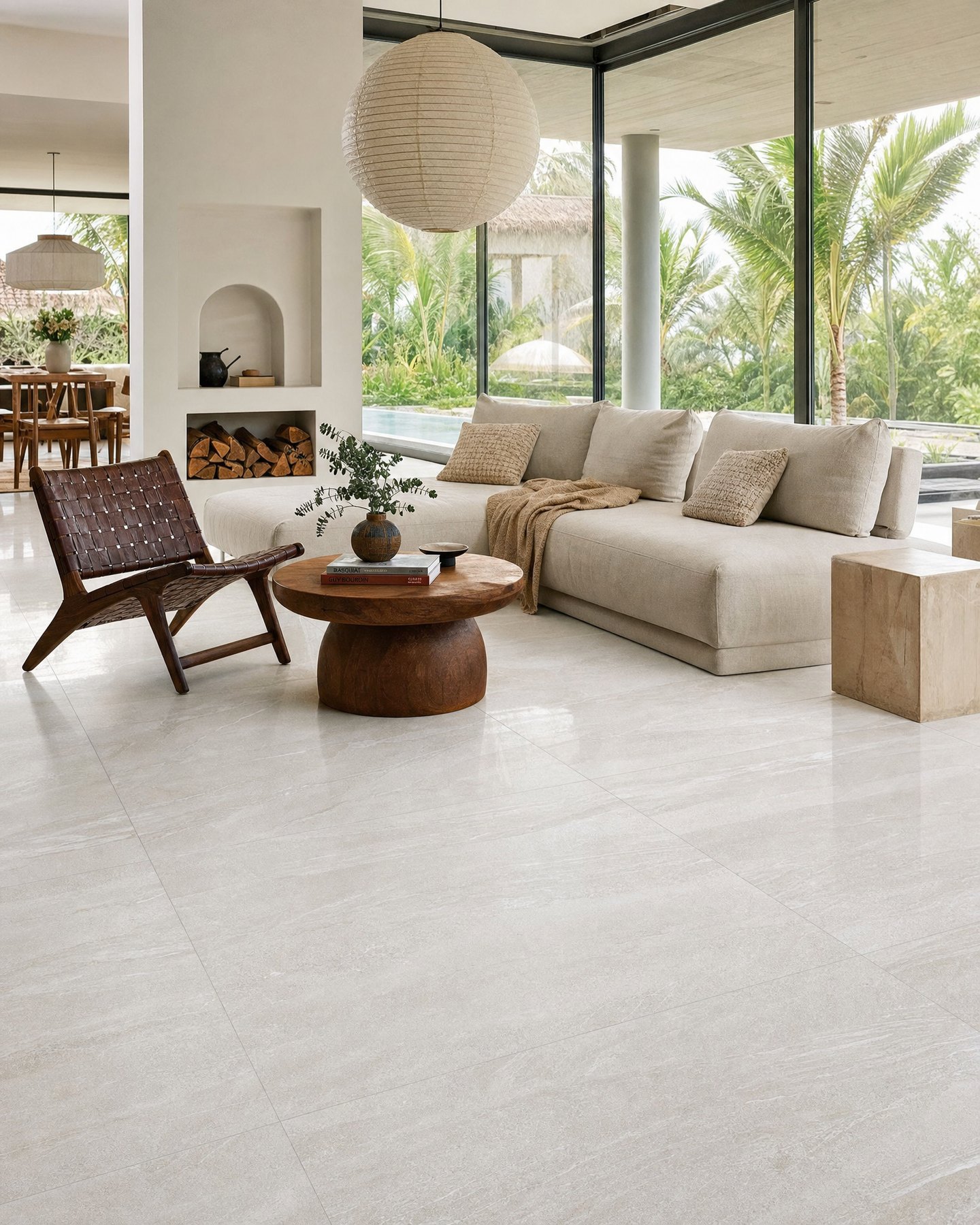
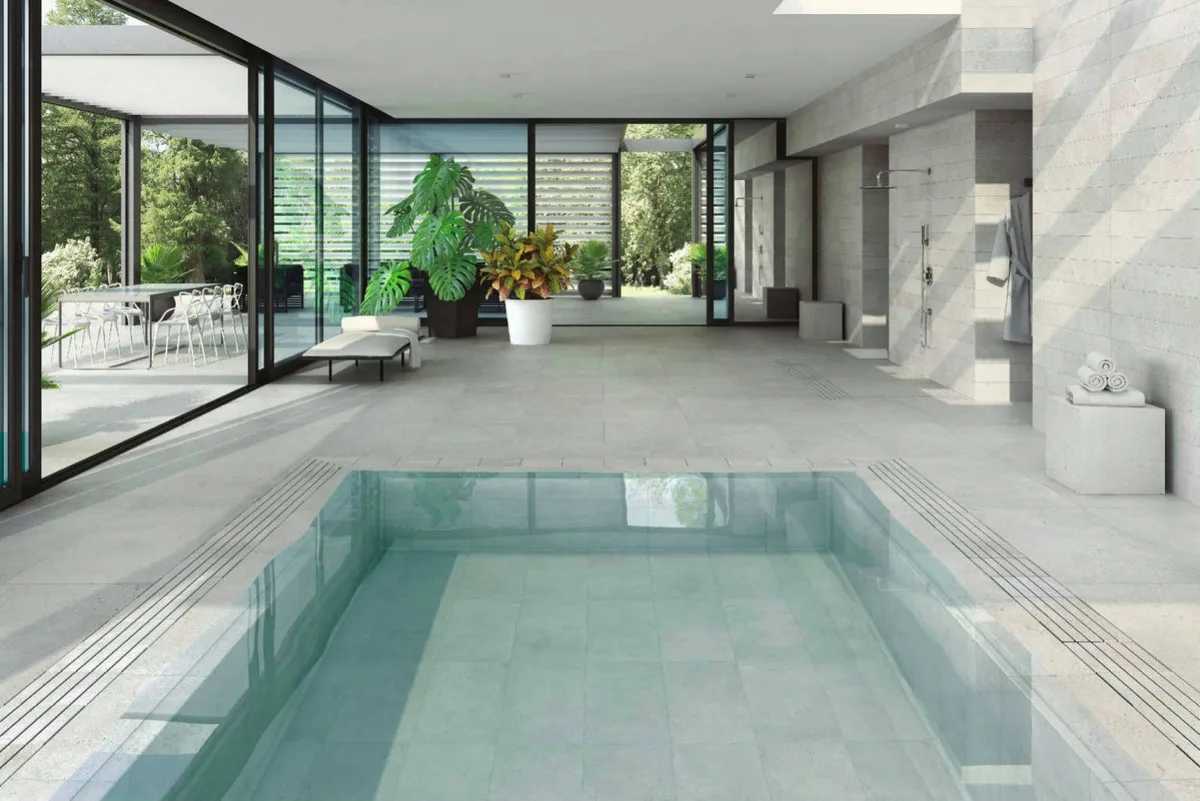

The six stages of an install, and where subfloor preparation sits among them.
Acclimation and subfloor moisture
Two things decide whether a floating floor stays flat: how long the boxes sat in the room, and how wet the slab under them is. In Florida the slab is the harder of the two. This guide covers acclimation for SPC vinyl and laminate, the moisture tests a warranty asks for, and the flatness tolerance that turns into lippage when it is missed.
Download as PDFWhat acclimation is
Acclimation is letting the flooring reach the conditions of the room it will live in before you lock it together. A plank ten degrees colder than the room grows after it is installed. A plank off a hot truck shrinks. Either way the floor moves after the last board goes down, and by then it has nowhere to move to.
The room has to be at its normal living temperature, not just holding the boxes. Air conditioning running, doors shut, the house behaving the way it will once someone lives in it. A shut up Florida house in August is not that, and neither is the garage.
Rigid core against wood fibre
SPC is stone plastic composite. The core is limestone powder in rigid PVC, with no wood in it, so humidity does not change its size. It does expand and contract with temperature, which is why makers still ask for a rest in the room and a gap at every wall.
Laminate is different underneath. Its core is high density fibreboard, and wood follows the air around it. Move a pack from a hot warehouse into a conditioned house and the boards give up moisture and shrink before anyone clicks them together. Laminate instructions ask for longer than SPC instructions do.
| Core | What moves it |
|---|---|
| SPC vinyl, limestone powder in rigid PVC | Temperature. Humidity does almost nothing to it. |
| Laminate, high density fibreboard | Temperature and relative humidity. The core is wood. |
Gapping, peaking, buckling
A floor that skipped acclimation rarely fails on installation day. It fails the first time the season turns.
GAPPING
Planks laid warm and wide contract as the room settles, and the joints open. A line of daylight runs along one side of the room.
PEAKING
Planks laid cold and tight expand, run out of gap at the wall, and press on each other. The joint lifts and you feel a ridge underfoot.
BUCKLING
The same push with nothing left to give. The floor lifts off the subfloor across a whole run, and the fix starts at the perimeter.
All three are movement with nowhere to go. Acclimation lowers how much there is, and the gap at every wall takes the rest. See installation basics for where subfloor preparation sits in the sequence.
Why a dry slab can be wet
Most Florida homes sit on a concrete slab poured on the ground. The ground under it is warm and wet, the water table is close, and moisture moves up through concrete as vapour whether or not the surface feels dry.
A slab dries from the top down. The surface gives its water to the room and reads dry to a hand or a hardware store meter, while the concrete an inch below still holds plenty. Lay a waterproof floor over it and the drying stops. Humidity inside the slab climbs, and the adhesive, the underlayment and the plank backing sit in it.
The age of the pour is not an answer either. A slab on grade with no vapour retarder under it never finishes drying, because the ground keeps feeding it.
Testing the slab
Two standard tests give you a number. A third only tells you to worry.
| Test | What it gives you |
|---|---|
| ASTM F2170, in-situ relative humidity | Probes sit in holes drilled into the slab, equalise, then read as a humidity percentage. It reads the body of the slab, which is why most makers write their limit as an RH figure. |
| ASTM F1869, anhydrous calcium chloride | A weighed dish of salt sits sealed under a dome on bare concrete, then is weighed again. The result is an emission rate in pounds per 1,000 square feet per 24 hours, from the top of the slab only. |
| ASTM D4263, plastic sheet | Tape plastic down and look for condensation under it. Yes or no, no number. A screening check, never a qualifying test. |
Both numbered tests need the building at its service conditions, air conditioning running, before and during. Every flooring and adhesive maker sets its own maximum, so use the figure printed for the product you bought.
NEW SLAB
A vapour retarder sheet goes directly under the concrete at the pour. That is the one place it does its whole job.
OLD SLAB
Over the limit means a moisture mitigation coating on the surface first, and the floor over that. The film underlayment in the box is not one of these.
THE WARRANTY
Most manufacturer warranties require a documented moisture test on any slab. No test, no claim.
Flat, and why lippage follows
Moisture is one enemy under the floor. The other is a subfloor that is not flat, and it shows up as lippage, one edge sitting higher than the edge beside it.
Flatness is a deviation measured over a distance, not something judged by eye. ANSI A108.02 asks for 1/8 inch in 10 feet and 1/16 inch in 2 feet under tile with any edge 15 inches or longer, which covers 24 by 48, the most common size in this catalogue. Smaller tile is allowed 1/4 inch in 10 feet. Floating floors carry their own tolerance from the maker.
A long tile or a long plank cannot follow a hump, so it bridges and one end lifts. Over a dip it spans open air, and a locking joint takes a load it was not drawn for. Grinding the high spots and filling the low ones is the cheapest hour in the job.
What a rigid SPC core resists, and what it does not do for the slab.
Why 24 by 48 asks more of a flat floor than a smaller tile does.
The joint width, and the trim piece that covers the gap at the wall.
Common questions
How long do the boxes need to sit?
It depends on the product. Rigid core SPC asks for less than laminate because humidity does not move it, and some lines state that no rest period is needed. The hours and the temperature range are printed in the box, and that sheet is what a claim is measured against.
Does porcelain tile need acclimation?
No. A fired porcelain body absorbs 0.5% of its weight in water or less and does not change size with the room. The subfloor half of this guide still applies, and applies harder, because a long tile is less forgiving of a hump than a plank is.
The slab feels dry. Do I still need a test?
Yes. A slab dries from the top down, so the surface reads dry long before the body of it is. The test is what the warranty asks for, and it costs a fraction of the floor it protects.
Can I install over a slab that reads too high?
Not directly. The slab takes a moisture mitigation system first and the floor goes over that. Skip it and the problem moves into the adhesive or against the underside of the plank, where nobody sees it until the floor tells you.
SPC is waterproof. Can I ignore the slab?
The plank is waterproof and will not swell. That does not settle the assembly. Moisture trapped under a waterproof floor still has nowhere to go, so it goes into the adhesive, the underlayment and anything organic near the perimeter.
Ask before the boxes open
Every PORCEMALL SPC vinyl and laminate product carries the maker's own acclimation and subfloor instructions. Ask for that sheet before the job starts, not after.